
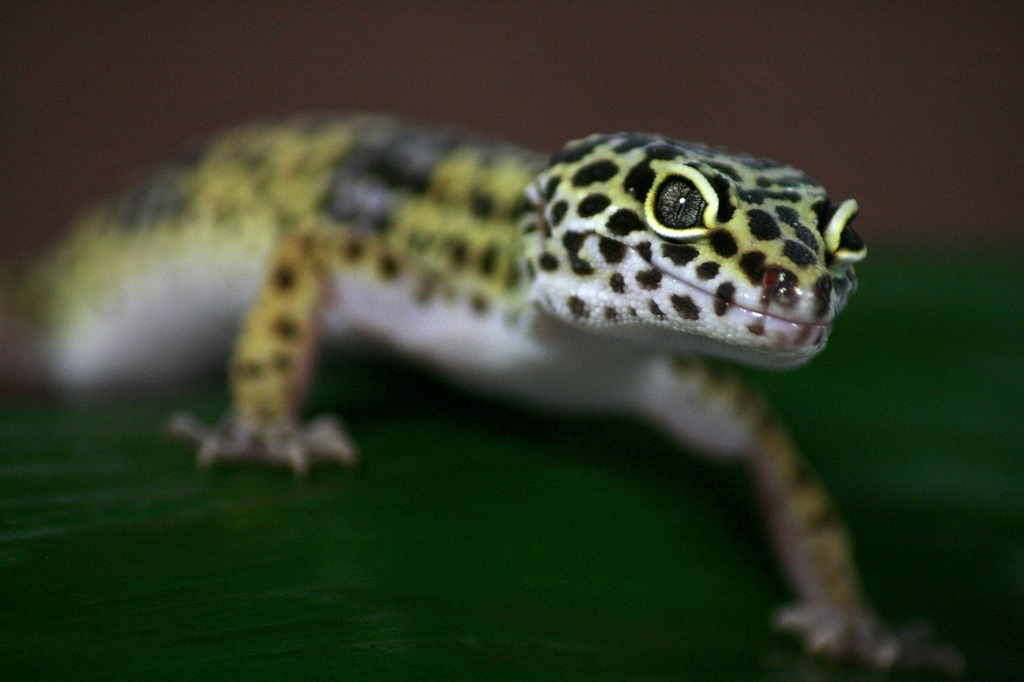
Leopard Gecko Care Guide
Housing
The minimum enclosure size for an adult leopard gecko is:
Length: 3ft × Depth: 1.5ft × Height: 1.5ft (36″ × 18″ × 18″).
However, at Repxotics, we recommend a minimum of 36″ × 24″ × 24″ wherever possible.
Although leopard geckos are primarily terrestrial animals, they’re surprisingly active and enjoy climbing, exploring and making use of different levels within their enclosure. Providing additional floor space and height allows you to create a much more enriching environment, with plenty of opportunities for natural behaviours.
This is a minimum, not a maximum! If you have the space and budget to go bigger, we would always encourage it. A larger enclosure also provides more room for appropriate temperature gradients, multiple hiding places and additional climbing opportunities.
Leopard geckos generally reach their adult size at around 18–24 months of age, although growth rates vary between individuals.
When housing a young gecko in a larger vivarium, it’s particularly important to provide plenty of hides, foliage, branches and other cover. Leopard geckos naturally seek shelter, and a large, open enclosure without sufficient hiding places can leave them feeling exposed.
A properly furnished enclosure will encourage your gecko to explore confidently while still having somewhere secure to retreat whenever it chooses.
As leopard geckos are solitary animals, we recommend housing them individually.
Lighting & Equipment
Leopard geckos are generally considered crepuscular animals, meaning they’re most active around dawn and dusk, although they may also be active during the night.
In the wild, they experience natural daylight and varying levels of UV exposure, often emerging from their shelters during periods of lower light intensity.
Although leopard geckos don’t require the same intensity of lighting as fully diurnal species such as bearded dragons, providing an appropriate day/night cycle and access to low-level UVB is still an important part of their husbandry.
We recommend providing approximately 10–12 hours of daylight, with all visible lighting switched off overnight. A timer is a great way to maintain a consistent routine.
Leopard geckos should also have access to shaded areas and secure hides throughout their enclosure, allowing them to choose how much light they’re exposed to.
UVB Lighting
UVB plays an important role in reptile health, allowing animals to produce vitamin D3, which is essential for absorbing and utilising calcium correctly.
Although leopard geckos can obtain some vitamin D3 through their diet, we recommend providing appropriate UVB lighting to support natural behaviours and healthy calcium metabolism.
For a standard 3ft × 1.5ft × 1.5ft vivarium, we recommend a quality T5 UVB lighting system, such as:
- Arcadia ProT5 ShadeDweller 7% UVB.
- Reptile Systems ECO T5 units with an appropriate UVB tube.
The correct UVB strength and installation distance will depend on the height of your enclosure, the distance between the lamp and your gecko, and whether the light passes through any protective mesh.
Leopard geckos are generally considered a Ferguson Zone 1–2 species. We recommend providing a low-level UVB gradient, with a maximum accessible UVI of approximately 0.7–1.5 in the basking area and access to complete shade.
The percentage printed on a UVB bulb doesn’t necessarily tell you how much UVB your animal is receiving. Ideally, the output should be measured using a UV Index meter, particularly when installing lighting in larger or more complex enclosures.
We recommend positioning the UVB lamp towards the warm end of the enclosure, leaving the cooler end with lower light levels. This creates a natural light gradient and allows your gecko to regulate its exposure.
UVB bulbs also lose output over time, even when they’re still visibly producing light. Always follow the manufacturer’s replacement recommendations and check output where possible.
Supplementary Lighting
Leopard geckos benefit from a natural day/night cycle, and supplementary LED lighting can help illuminate larger enclosures and support live plants where used.
However, leopard geckos should always have access to shaded areas and darker hiding places, rather than being exposed to bright lighting throughout the entire enclosure.
Remember that LED lighting is not a replacement for UVB, and both should be selected according to the needs of your animal.
Heating
Leopard geckos are ectothermic, meaning they rely on external heat sources to regulate their body temperature.
Providing an appropriate temperature gradient is essential, allowing your gecko to move between warmer and cooler areas as needed.
All heat sources must be controlled by an appropriate thermostat to prevent overheating and accidental injury.
Basking Temperature
The basking area is the surface directly beneath the heat source where your leopard gecko can sit to warm up.
We recommend a basking surface temperature of approximately 30–34°C, with a cooler area available at the opposite end of the enclosure.
Providing a raised basking platform, such as a suitable rock or piece of slate, allows your gecko to absorb warmth from the surface as well as from the heat source above.
Leopard geckos will often use warm surfaces to help regulate their body temperature, particularly after feeding.
Heat Sources
We recommend using overhead heating, such as a basking bulb, as the primary daytime heat source.
For a standard 3ft × 1.5ft × 1.5ft vivarium, we generally recommend a 100W basking bulb controlled by a Microclimate or HabiStat dimming thermostat.
The wattage required will depend on your enclosure size, ventilation, room temperature and the distance between the bulb and basking area.
Alternatively, an EVO Connect or suitable day/night thermostat can be used to automate your heating, provided it has the appropriate dimming function.
Overhead heating provides a more natural source of warmth than relying solely on heat mats, allowing your gecko to bask beneath a heat source while also warming the surrounding décor.
Measuring Temperatures
The best way to measure basking temperatures is with an infrared thermometer. This allows you to check the surface temperature of rocks, branches and other areas throughout the enclosure.
A digital thermometer with a probe is also useful for monitoring ambient temperatures, particularly at the cooler end.
We recommend monitoring both the basking surface and the cool end of the enclosure rather than relying on a single thermometer.
Temperatures should be checked regularly, as changes in room temperature and seasonal conditions can affect your setup.
Night-time Heating
In most UK homes, additional heating overnight isn’t necessary, as leopard geckos naturally experience a drop in temperature when the sun goes down.
However, if your home regularly drops below approximately 16°C overnight, supplementary heating may be required.
We recommend using a ceramic heat emitter controlled by a separate, appropriate thermostat, such as a pulse thermostat.
Any night-time heating should produce no visible light, allowing your gecko to maintain a natural day/night cycle.
Humidity
Leopard geckos originate from relatively dry environments, but this doesn’t mean they should be kept without access to moisture.
We recommend maintaining general enclosure humidity at approximately 20–40%, although natural fluctuations are normal.
Consistently high humidity, particularly when combined with poor ventilation, should be avoided. Brief increases in humidity, such as after cleaning or changing substrate, aren’t generally a cause for concern.
Humid Hides
All leopard geckos should have access to a humid hide 24 hours a day.
We recommend positioning this towards the middle of the enclosure, slightly closer to the warm end.
The hide should contain damp sphagnum moss or another suitable moisture-retaining material, creating a humid microclimate that your gecko can use whenever needed.
This is particularly important during shedding, as insufficient moisture can lead to retained shed around the toes, tail and eyes.
The moss should be kept damp but not soaking wet, and replaced regularly to prevent the build-up of bacteria or mould.
Even when your gecko isn’t shedding, its humid hide should remain available so it can regulate its own exposure to moisture.
Diet & Feeding Routine
Leopard geckos are insectivores, meaning their diet consists of live insects.
A varied diet is important, as different feeder insects provide different nutritional benefits. Feeding a mixture of suitable insects also encourages natural hunting behaviours.
At Repxotics, our leopard geckos are fed a combination of:
- Crickets.
- Locusts.
- Mealworms.
- Occasional cockroaches.
All feeder insects should be properly gut-loaded before being offered to your gecko. This means providing them with a nutritious diet so they pass those nutrients on to your reptile.
Live Feeding
Younger leopard geckos generally require more frequent feeding than adults, as they’re growing and developing rapidly.
Hatchlings are usually offered appropriately sized small to medium crickets or small locusts, while adults can typically manage standard to large crickets and larger locusts.
As a general guide, feeder insects should be small enough for your gecko to catch, chew and swallow comfortably.
The commonly used guideline of selecting insects no wider than the space between your gecko’s eyes can be helpful, but shouldn’t be treated as an absolute rule. The shape and type of insect, along with the individual gecko’s size and feeding ability, should also be considered.
At Repxotics, we also offer mealworms in a shallow feeding dish, usually adding around 5–10 depending on the size of the gecko.
We monitor how many remain to help keep track of their appetite and feeding habits.
For adult leopard geckos, feeding frequency should be reduced according to their age, weight and body condition. Healthy adults generally don’t require daily feeding, and leaving unlimited insects available can encourage overfeeding.
Always remove uneaten crickets and other free-roaming feeder insects, as these can disturb or potentially injure your gecko.
Treats
Treat foods should be offered in moderation and shouldn’t make up a significant part of your leopard gecko’s diet.
Popular treats include:
- Morio worms.
- Waxworms.
- Small fruit beetle grubs.
Many of these insects are particularly high in fat, so we recommend offering them occasionally rather than as part of a regular feeding routine.
Overfeeding high-fat insects can contribute to obesity and associated health problems.
Water
Fresh, clean drinking water should always be available.
We recommend providing a shallow water dish in an easily accessible area of the enclosure.
Change the water daily and immediately if it becomes contaminated with substrate, insects or waste.
Although leopard geckos obtain some moisture from their food, they should always have access to fresh drinking water.
Supplementation
Supplementation is an important part of leopard gecko care. Feeder insects should be appropriately supplemented to ensure your gecko receives the vitamins and minerals needed for healthy growth and development.
There are several reputable brands available, with popular options including:
- Arcadia EarthPro-A.
- Arcadia CalciumPro-Mg.
- Vetark Nutrobal.
- Zoo Med Calcium without D3.
- Zoo Med ReptiVite.
There are different ways to supplement leopard geckos, and the correct routine will depend on the products being used, the quality of the UVB setup and the individual animal’s requirements.
Our original recommended rotation for a young gecko was:
- Days 1 & 2 – Calcium supplement.
- Day 3 – Multivitamin.
- Days 4 & 5 – Calcium supplement.
- Day 6 – Multivitamin.
- Day 7 – Calcium supplement.
However, this should not be treated as a universal schedule. Different supplements contain different ingredients and concentrations, so always follow the manufacturer’s instructions and avoid combining products that may result in excessive vitamin or mineral intake.
Particular care should be taken with vitamin D3. When appropriate UVB lighting is provided, high levels of additional dietary D3 may not be necessary, and excessive supplementation can be harmful.
We also recommend providing a small dish of plain calcium powder without D3 in the enclosure so your gecko can access it when needed.
Adult leopard geckos generally require less frequent feeding than juveniles, so supplementation should be adjusted to suit their feeding schedule.
Décor & Substrate
Décor & Enrichment
Décor isn’t just there to make your vivarium look attractive. It plays an important role in your leopard gecko’s physical and mental wellbeing.
Although leopard geckos are primarily ground-dwelling reptiles, they’re surprisingly capable climbers and will happily explore branches, rocks and raised platforms when given the opportunity.
In the wild, leopard geckos spend time moving between rocky crevices, sheltered areas and open ground, so we should aim to provide opportunities for these natural behaviours in captivity.
One of the most important pieces of décor is a raised basking platform positioned beneath the heat source. This allows your gecko to warm itself on a suitable surface while still having the option to move away when needed.
Natural branches, cork bark, rocks and climbing structures are also great additions. They encourage movement, exploration and exercise, helping to keep your gecko active and physically fit.
We recommend providing multiple hiding places throughout the enclosure, including at least one at the warm end, one at the cool end and a humid hide.
Artificial or live plants can also be used to create shaded areas and additional cover, making your gecko feel more secure when moving around its enclosure.
Leopard geckos will often make use of far more space than people expect, which is one of the reasons we recommend larger enclosures wherever possible.
Always make sure décor is stable, securely positioned and free from sharp edges. Heavy rocks and climbing structures should be supported securely to prevent them from shifting or collapsing.
Substrate
Loose substrate has been a controversial subject within the reptile-keeping hobby for many years, largely due to concerns surrounding impaction.
However, loose substrate is not automatically unsafe for every leopard gecko. The risk of impaction is influenced by several factors, including the animal’s health, hydration, nutrition, temperatures and general husbandry.
For healthy, established leopard geckos kept under appropriate conditions, suitable loose substrates can provide excellent enrichment.
They allow natural digging behaviours and help create a more realistic environment, encouraging your gecko to interact with its surroundings.
We recommend looking at reptile-specific clay-based or sand/soil substrates, such as:
- ProRep Leo Life.
- Arcadia EarthMix Arid.
- Other suitable reptile-safe arid soil and clay-based mixtures.
These substrates are designed to replicate aspects of the natural terrain leopard geckos would encounter in the wild.
It’s important to remember that loose substrate isn’t suitable for every individual. Sick, dehydrated or poorly established geckos may benefit from temporary solid flooring while their health is monitored.
We strongly recommend avoiding Calci-Sand and other calcium-enriched substrates, as these can encourage animals to intentionally ingest substrate and may contribute to digestive problems.
We also recommend avoiding wood-chip-style substrates, crushed walnut and other unsuitable loose materials.
If you prefer not to use loose substrate, suitable textured solid flooring can be used. However, we would still recommend providing a separate digging area to allow your gecko to display natural behaviours.
Ultimately, the aim is to provide a safe, clean and enriching environment that allows your leopard gecko to behave as naturally as possible.
